

New - Just Now
A townhome is often the lowest-maintenance way into an area you want to live in, and for some buyers that is exactly the right trade. For others the shared walls and the association rules turn into the thing they like least about the house. The difference usually comes down to what people understood before they signed. Here is what separates a townhome from a condo and from a detached house in North Carolina, and what to check while you still have the right to walk away.
What you actually own
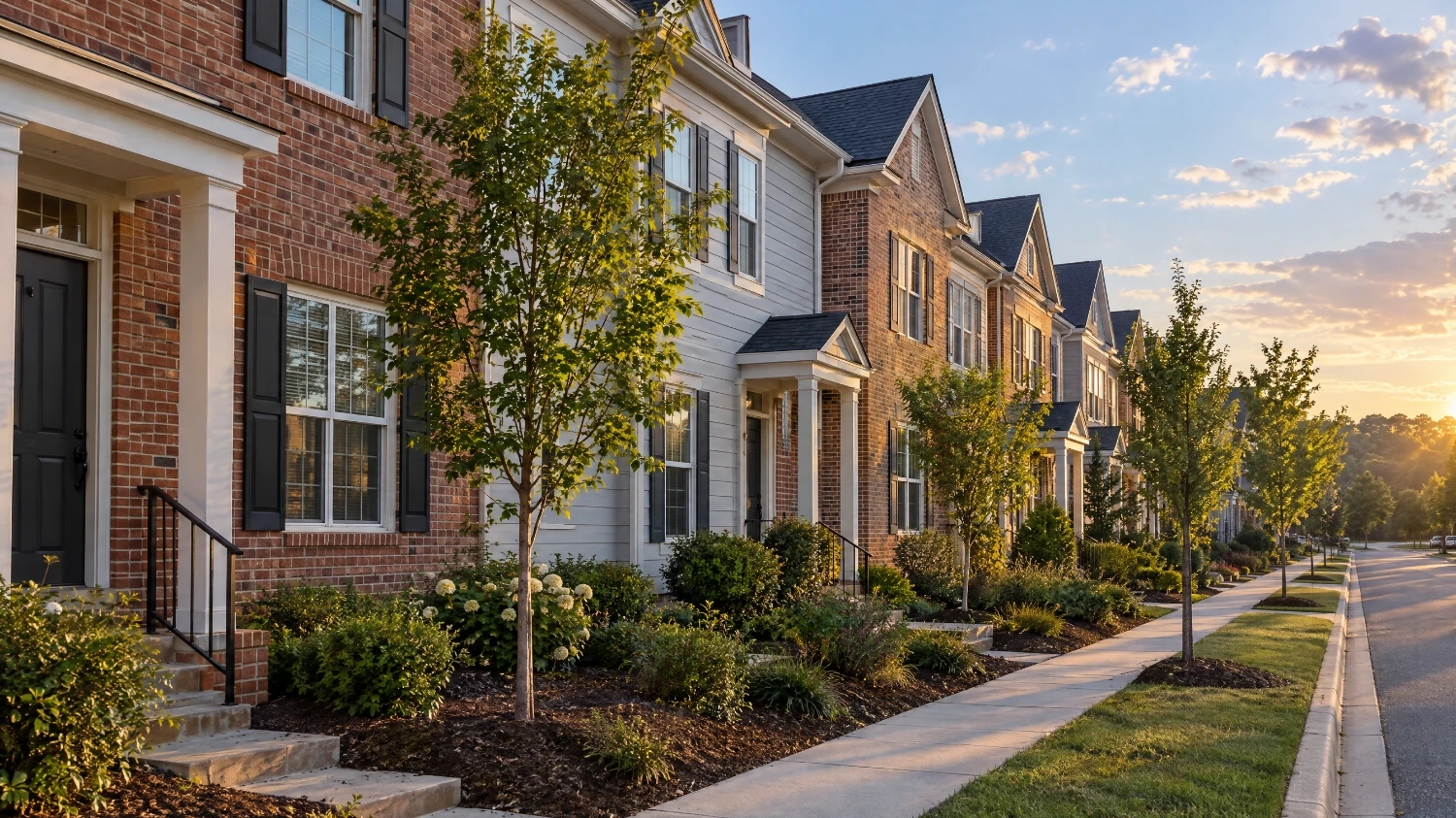
In most North Carolina townhome communities you own the structure and the lot it sits on, the same form of ownership you would have with a detached house. What makes it a townhome is the shared wall and the fact that the land around your unit belongs to the association rather than to you.
A condo is a different legal animal. There you own the interior of your unit plus an undivided share of everything else, and the building itself is common property. Two homes can look identical from the street and be structured completely differently on paper.
This matters because it decides who fixes what, which insurance policy answers when something fails, and how your lender treats the loan. Ask the listing agent which one you are looking at rather than judging by the architecture, and read the declaration to confirm it. Attached housing in this state falls under one of two statutes, the Planned Community Act or the Condominium Act, and the governing documents will say which applies.
What the association handles, and what it charges
The appeal of attached housing is that somebody else mows, mulches, and often replaces the roof. The cost is a monthly or quarterly assessment, and the only way to know whether it is reasonable is to look at what it buys. Ask for the current budget and read what the association is responsible for line by line. Roofs, siding, private roads, and water lines are the expensive ones.
Then ask what is in reserves. An association that collects comfortable dues but has set nothing aside for a roof replacement everyone can see coming is not cheap, it is deferred. That shortfall arrives later as a special assessment, and it lands on whoever owns the unit at the time, which may well be you.
Dues also tend to move over time. Ask for the last two or three years of budgets rather than just this one, and you will see the direction of travel without anyone having to characterise it for you.
Where a townhome genuinely fits, and where it does not
It fits when you would rather spend your Saturdays somewhere other than behind a mower, when you want to be in a specific area and a detached house there does not work for you, or when a lock-and-leave arrangement suits how much you travel. Around Lake Norman it also puts some buyers within reach of the water who would otherwise be priced out of it entirely.
It does not fit if you want a workshop, a fenced run for a dog, a boat or camper parked at home, or the freedom to repaint the exterior and plant what you like. Those are the restrictions people chafe against later, and they are almost always written down somewhere you could have read first.
Shared walls are worth being honest about too. Construction quality varies enormously between communities and between builders. Visit on an evening or a weekend rather than a quiet weekday morning, and stand in the room that shares a wall with the neighbor.
Financing works differently, and it can surprise you
Because a fee simple townhome is financed much like a detached house, most buyers never notice a difference. Condos are where it gets complicated. Lenders look at the project as well as the borrower, and some loan programs need the community itself to meet conditions covering owner-occupancy, the share of owners behind on dues, how much of the property is commercial, and the state of the reserves and the insurance.
If the project does not meet those conditions, your financing options narrow even though nothing about you changed. This can surface late, which is a miserable way to find out. Tell your lender it is attached housing at the pre-approval stage rather than after you are under contract, and if it is a condo, ask early whether the project has been approved for the loan type you are planning to use. Our walk-through of pre-approval versus pre-qualification covers what that conversation should produce.
Use the due diligence period for the paperwork, not just the inspection
North Carolina gives you a negotiated due diligence period, and in that window you can generally terminate for any reason at all. Most buyers spend it entirely on the inspection and the loan. With attached housing the documents deserve equal billing, because they describe what living there is actually like.
Read the declaration and the rules, the current budget, the reserve study if one exists, the insurance certificate, and the minutes of the last year of meetings. Minutes are the most revealing of the set, because that is where a coming assessment or a long argument about the roofs shows up before it reaches the budget. Our guide to the association documents worth reading before you buy goes through each one, and due diligence versus earnest money explains what the two deposits do and which one you risk.
If the answers are slow in arriving, treat that as information. You are asking for documents the association is set up to produce, and a long delay tells you something about how the place is run.
Where to start
Decide first whether you want attached housing at all, because that answer shapes everything after it. If you do, the community matters as much as the unit: two townhomes on the same street can carry very different dues, reserves, and rules. We are happy to pull the documents and read them with you before you are committed to anything. Start with our guide for buyers if you are early in the process.
This is general information, not legal advice; confirm specifics with your agent or a real estate attorney.
Gonzalez Realty is an Equal Housing Opportunity firm. We do not discriminate on the basis of race, color, religion, sex, handicap, familial status, or national origin.
This post is for general educational purposes only and is not legal, tax, or financial advice. Real estate laws, loan programs, and market conditions change over time, and older posts may not reflect current details. Confirm specifics with your agent, a real estate attorney, a lender, or a tax professional before making a decision.
Portions of this content were drafted with AI assistance and reviewed by our team before publishing. Nothing on this page creates a client relationship with Gonzalez Realty.