


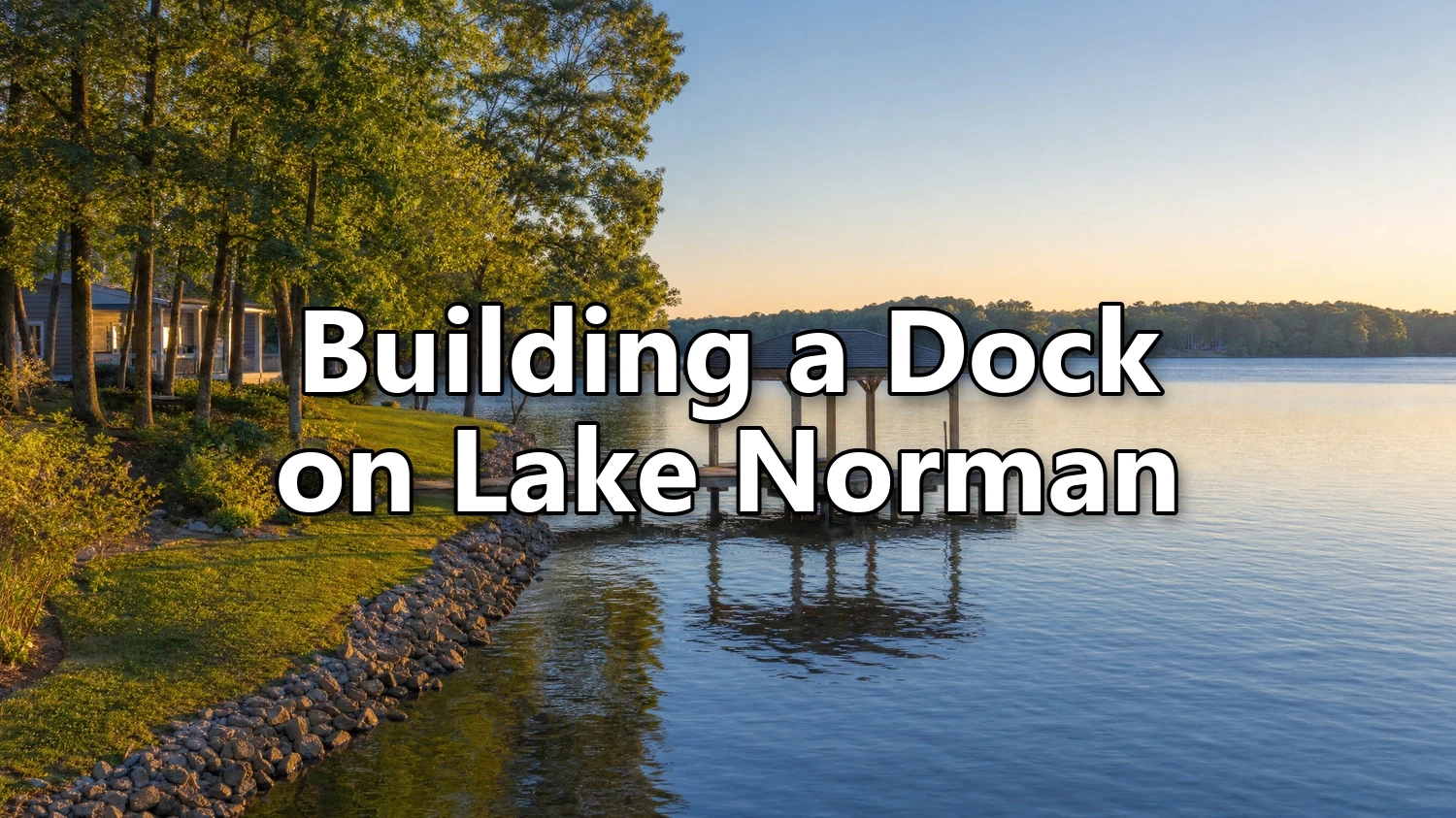
A lot on the water and a lot with a dock are not the same purchase. On Lake Norman, whether you can build one, how big it can be, and whether the one already there can stay as it is are all decided largely by Duke Energy, not just by the county or the seller. Buyers who learn that after closing tend to learn it expensively.
You own to the water's edge, not into it
Duke Energy operates Lake Norman under a federal license, and the lake's project boundary follows the full-pond shoreline at 760 feet above sea level. Duke owns or controls the lakebed inside that line, and in some places it also owns a strip of land above it. Exactly where your property line falls depends on the deed and survey for that specific lot, which is a question for a real estate attorney rather than a listing description.
Anything built inside the project boundary, a dock included, needs Duke's permission. Its own guidelines describe building there as a privilege granted by permit, not a right that comes with the lot.
Two approvals, not one
A new dock needs a permit from Duke Energy's Lake Services team, applied for online, followed by a site inspection. It also needs a county building permit, and Duke will not accept an application without one. Both carry fees, and once approved the dock is expected to be built within a year.
One rule matters a great deal to anyone buying land: Duke does not review private dock applications for a lot that has no house built on it. If you are buying a vacant waterfront lot planning to add a dock first and build later, the order has to be the other way around.
Not every waterfront lot qualifies
Duke classifies the whole shoreline. Stretches classed as Environmental, Natural or Bottomland Hardwood allow no construction at all, and some areas are flagged to be avoided unless there is no practical alternative. Residential shoreline is where private docks are normally allowed. The classification maps are public, and checking one before you make an offer takes minutes.
Frontage matters too. Duke's guidelines generally call for at least 100 feet of shoreline, measured along the project boundary, with allowances for lots recorded before certain dates. The rule is one dock per lot. And in a community with a shared dock, owning a slip there can remove the option of building your own, so read the community's documents as closely as the listing.
Size and design have firm limits
An individual private dock is limited to two boat slips or lifts and 1,000 square feet under Duke's guidelines. It can reach no more than a third of the way across the water, or 120 feet past full pond, whichever is shorter, and it has to leave clear room for boats to maneuver.
Duke also extends your side property lines out into the water, and no part of the dock or a moored boat can cross them without the neighbor's written release. Boathouse sides cannot be enclosed, structures stay single story, plumbing is not allowed, and a boat at a private dock cannot be lived on. A dock that looks like a second cottage in a photo from another lake is not a template for this one.
An existing dock is not automatically yours as-is
Dock permits do not transfer on their own. After closing, the new owner applies to transfer the permit, which carries a fee, and Duke inspects to confirm the dock was properly permitted and has not been modified since. If it finds a problem, correcting it will likely fall to you, not the previous owner.
Duke generally releases a dock's permit records only to the owner of record, not to buyers or agents. So ask the seller for a copy of the permit and the approved plans during your due diligence period, and compare them with what is actually on the water. If you plan to change the dock, it is worth asking the seller to obtain Duke's approval before closing rather than assuming you will get it afterward.
Look at the dock when the water is low
Lake Norman is not held at full pond. Duke's normal operating targets sit a foot or more below it through much of the year and lower still in the winter months, and dry stretches can pull it down further. On a gently sloping cove, Duke's own design guidance warns that a small drop can leave a dock sitting on mud.
Duke sets no minimum water depth for a permit, so depth is your homework, not theirs. Look at the property during a low-water period if you can, ask neighbors how the cove behaves, and treat a longer dock or a floating section as the practical fix it usually is. If you mainly want water access rather than a private dock, our guide to public boat access on the west shore covers the alternatives.
The shoreline and trees are regulated too
Clearing trees or vegetation inside the project boundary needs Duke's written approval, and North Carolina separately protects a 50-foot buffer measured from full pond. Seawalls and rip-rap need approval as well, with plantings preferred first. Unauthorized cutting can cost an owner far more than a fine: Duke's guidelines allow for removal of an existing dock and a multi-year bar on new permits.
Duke's rules are revised from time to time, so confirm the current version directly with Duke Energy Lake Services before relying on any figure here, and make the dock one of the first things you verify rather than the last.
This is general information, not legal advice; confirm specifics with your agent or a real estate attorney.
Gonzalez Realty is an Equal Housing Opportunity firm. We do not discriminate on the basis of race, color, religion, sex, handicap, familial status, or national origin.
This post is for general educational purposes only and is not legal, tax, or financial advice. Real estate laws, loan programs, and market conditions change over time, and older posts may not reflect current details. Confirm specifics with your agent, a real estate attorney, a lender, or a tax professional before making a decision.
Portions of this content were drafted with AI assistance and reviewed by our team before publishing. Nothing on this page creates a client relationship with Gonzalez Realty.