New - 20 Hours Ago
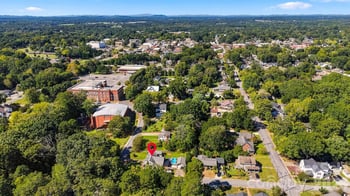



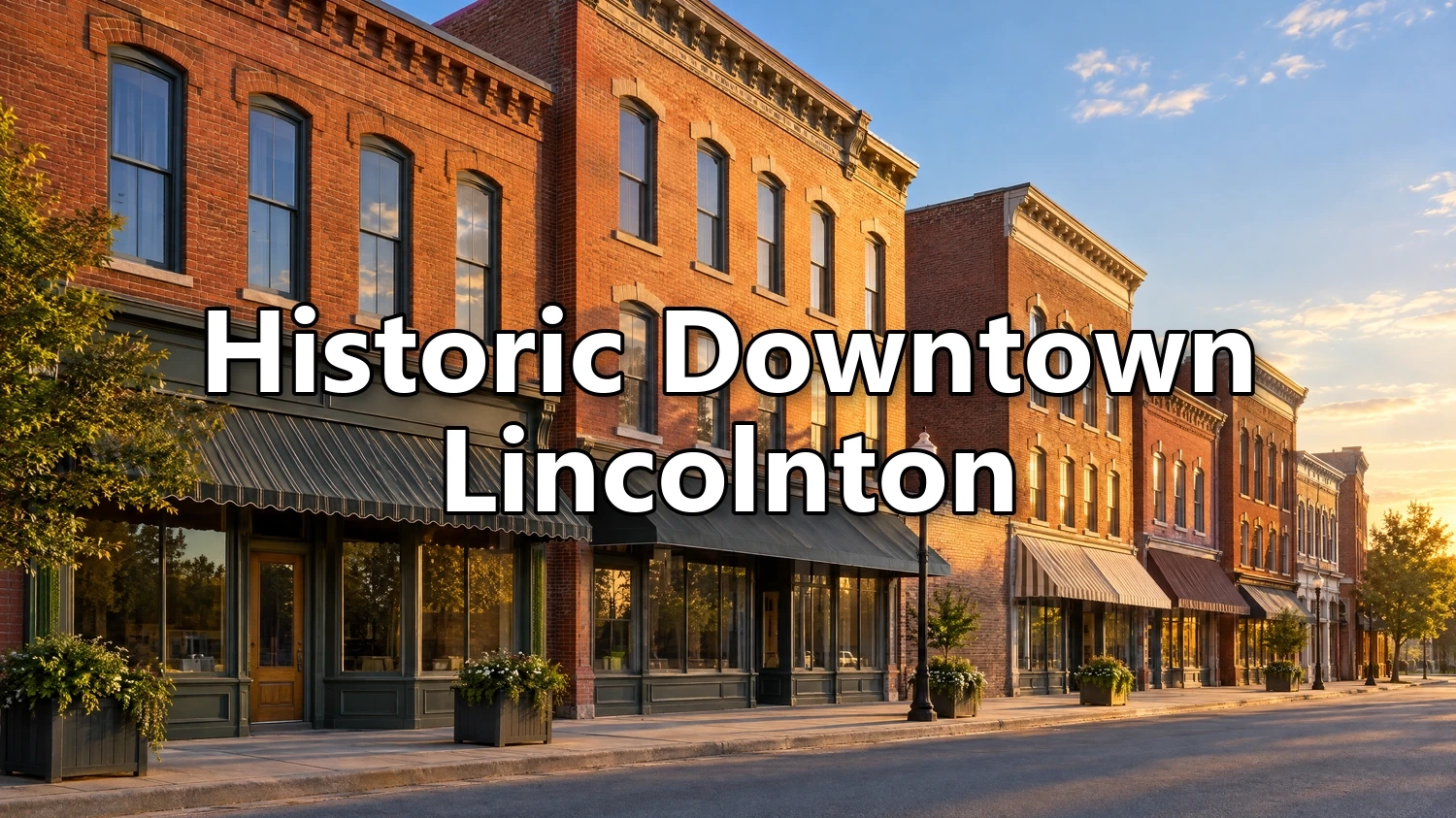
Lincolnton is the Lincoln County seat, about fifteen miles west of Denver on NC-150 and under forty from Charlotte, and its downtown is the real thing rather than a restored imitation of one. The commercial core is a National Register historic district of roughly 22 acres and 62 contributing buildings, most of them put up between about 1900 and the mid-1950s, arranged around a courthouse square that is still the centre of the town's life. Here are five reasons it is worth an afternoon.
The Lincoln County Courthouse anchors everything. It was built between 1921 and 1923, three storeys of stone-veneered Classical Revival with Doric columns, and it carries its own National Register listing separate from the district around it. The county and the city have been working on a redevelopment of the historic courthouse aimed at events and everyday use, so expect the square to keep changing.
Walk the block and the buildings tell you where the money came from. The Reinhardt Building on West Court Square, three storeys of brick with a rounded corner, went up in 1909 for R. S. Reinhardt, who owned the Elm Grove Cotton Mill, and was built by a local contractor. Mill money built Main Street here, and you can read it off the facades.
A few doors away, Pleasant Retreat Academy on East Pine Street is the oldest remaining brick building in town, a Federal-style schoolhouse from between 1817 and 1820. The 1937 post office on East Main holds a New Deal mural, "Threshing Grain," fourteen feet wide. The old Rivoli Theatre building on East Main ran as a cinema from around 1920 into the early fifties, and the small projection-room windows are still visible if you look up. There is a published walking tour if you would rather do this properly than wander.
The Marcia H. Cloninger Rail Trail is a paved linear park running about a mile and a half along the former Norfolk Southern corridor, right through the heart of downtown. It has murals along it, a train tunnel, and tree-lined stretches, and the old depot still stands at Pine and North Poplar.
One of the murals is worth stopping at: a railroad scene with an engine and two cars carrying a groundhog kiln and a textile loom, which pulls together the three things that built this part of the Catawba valley. The rail line itself arrived in July 1881, built by the Chester and Lenoir Narrow Gauge Railroad, the largest narrow-gauge operation in the Carolinas at more than 120 miles, later absorbed and converted to standard gauge.
Betty G. Ross Park on South Grove Street adds a nature trail, a seasonal pool, a shelter, volleyball, horseshoes, and an indoor court, and it doubles as the launch point for the local river paddle that takes out at Laboratory Mill.
City Lunch has been on Court Square since 1932 and still has the same screen door, serving meat-and-three, hot dogs, and burgers. Fausto Coffee on Northeast Court Square started in 1995 as an offshoot of a bicycle shop, has been under its current owners since 2010, and hangs work by local artists on its walls.
Good Wood Pizzeria on North Aspen does wood-fired pizza with a covered patio set up for shoulder-season evenings, Local Roots and Provisions on East Water Street is a restaurant, bar, and market doing Southern plates and brunch, and Untapped Territory on the same street is a family-run taproom with 21 rotating taps weighted toward Carolina breweries and vineyards, food trucks, and a fire pit. Scoops by the Square on North Aspen handles ice cream and mason-jar milkshakes, and Sweet Side Bakery and Cafe on South Academy covers the pastry end.
For browsing, Just Around The Corner on East Main is a two-storey antique, vintage, and artisan mall with pottery, turned wood, soaps, and textiles, Treasures on Main and The Owl's Nest cover more of the same, and 7th Moon Boutique on East Main does apparel and gifts. Downtown also has a social district, so check the signage for where a drink can travel. There is more on all of this in our guide to eating local in Lincolnton.
The Lincoln Cultural Center on East Main occupies the former First Baptist Church of 1922, designed by the Charlotte architect James M. McMichael and converted in 1991. Its Timken Performance Hall keeps a stained-glass rosette window in the dome, which is a remarkable thing to sit under at a community theatre production.
The building also houses the Lincoln County Museum of History, run by the county historical association, with exhibits and archival and photograph collections reaching back to the early 1770s. The Lincoln Theatre Guild, a community company founded in 1981, has been producing out of the Cultural Center since 1988 and stages four or five shows a year. The Arts Council of Lincoln County, going since 1971, keeps most of its exhibits and events free.
Round it out with the Charles R. Jonas Library on West Main, whose Lincoln County Room holds the genealogy and local history collections, an annual quilt show at the Cultural Center, a quilt trail, a historic cemetery tour, and a good deal of public art and murals downtown. Lincolnton is a designated Preserve America community, which is a fair reflection of how much of this is deliberate rather than accidental.
The Lincoln County Apple Festival is the big one, held on the third Saturday in October along West Main Street and running since 1972. It brings 250 or more craft and food vendors, two entertainment stages, local apple growers, and a farmers market, and it is among the largest one-day fall festivals in the state.
The rest of the calendar is busier than you might expect. Alive After Five fills the hundred and two hundred blocks of East Main with free outdoor concerts and a car show on Thursday evenings from May through September. There is an art crawl in spring, a wine fest on Main Street in April, car events through the summer and autumn, and an antique and vintage market day on the second Saturday in October.
Christmas is taken seriously: a parade and tree lighting on the Sunday after Thanksgiving, then Santa's Candyland Village and horse-drawn carriage rides on weekend evenings through December. The year ends with the Apple Drop, a street party downtown with the drop itself early in the evening, which is a considerably more civilised hour than midnight.
Two threads run through Lincoln County and neither is the one the guidebooks usually lead with. The first is textiles, and it starts here: Michael Schenck built the first cotton mill in North Carolina about a mile and a half east of Lincolnton, founded in 1813 and running by 1814, generally described as the first successful cotton mill south of the Potomac. A state highway marker on East Main records it. The Eureka Manufacturing Company mill on East Water Street, two storeys of brick with a three-storey stair tower built between 1907 and 1910, is on the National Register, and the Laboratory Historic District just outside town preserves a mill site that ran as a cotton factory from 1819, served as a Confederate laboratory, went back to textiles, and finally closed in 1994.
The second is iron. Lincoln County mines were working from about 1790 and the county supplied much of North Carolina's iron in the first half of the nineteenth century, with production centred on bloomeries and forges drawing on the ore bank east of town. The Madison-Derr Iron Furnace, a cold-blast furnace built in 1809 and rebuilt in 1855 before the Civil War stopped it, still stands at about thirty feet with its earthen flumes and stone foundations, and it joined the National Register in 2019.
Older still is the Battle of Ramsour's Mill, fought on a foggy morning on 20 June 1780, when roughly 400 Patriot militia under Colonel Francis Locke defeated some 1,300 Loyalists camped on a wooded hill a few hundred yards from the mill. Historians treat it as significant out of proportion to its size for breaking up Loyalist organising in the backcountry. The site sits on the hill behind Battleground Elementary School with trails and interpretive signage, and the commemorative rock on the courthouse lawn was moved there from the battleground.
Getting here is easy enough: US-321 runs as a four-lane on the east side of town, NC-150 is the east-west route out to the Lake Norman bridges, and it is roughly twenty miles to the lake's western shore. Denver is about fifteen miles and twenty minutes away, Gastonia seventeen, Hickory twenty-three, and Charlotte under forty. If you are weighing up this side of the county, our Lincolnton listings and our Denver pages cover both ends of NC-150, and we are happy to talk through the buying side whenever you are ready.
Gonzalez Realty is an Equal Housing Opportunity firm. We do not discriminate on the basis of race, color, religion, sex, handicap, familial status, or national origin.
This post is for general educational purposes only and is not legal, tax, or financial advice. Real estate laws, loan programs, and market conditions change over time, and older posts may not reflect current details. Confirm specifics with your agent, a real estate attorney, a lender, or a tax professional before making a decision.
Portions of this content were drafted with AI assistance and reviewed by our team before publishing. Nothing on this page creates a client relationship with Gonzalez Realty.